

Thanks to the 118 of you who are subscribed to ‘Diary of a YOPD’ and the 268 people who have taken the time to read my last update.
Help this newsletter to reach more people by subscribing, sharing, and forwarding to others. If you have a Substack account, then likes, comments and restacks help too!
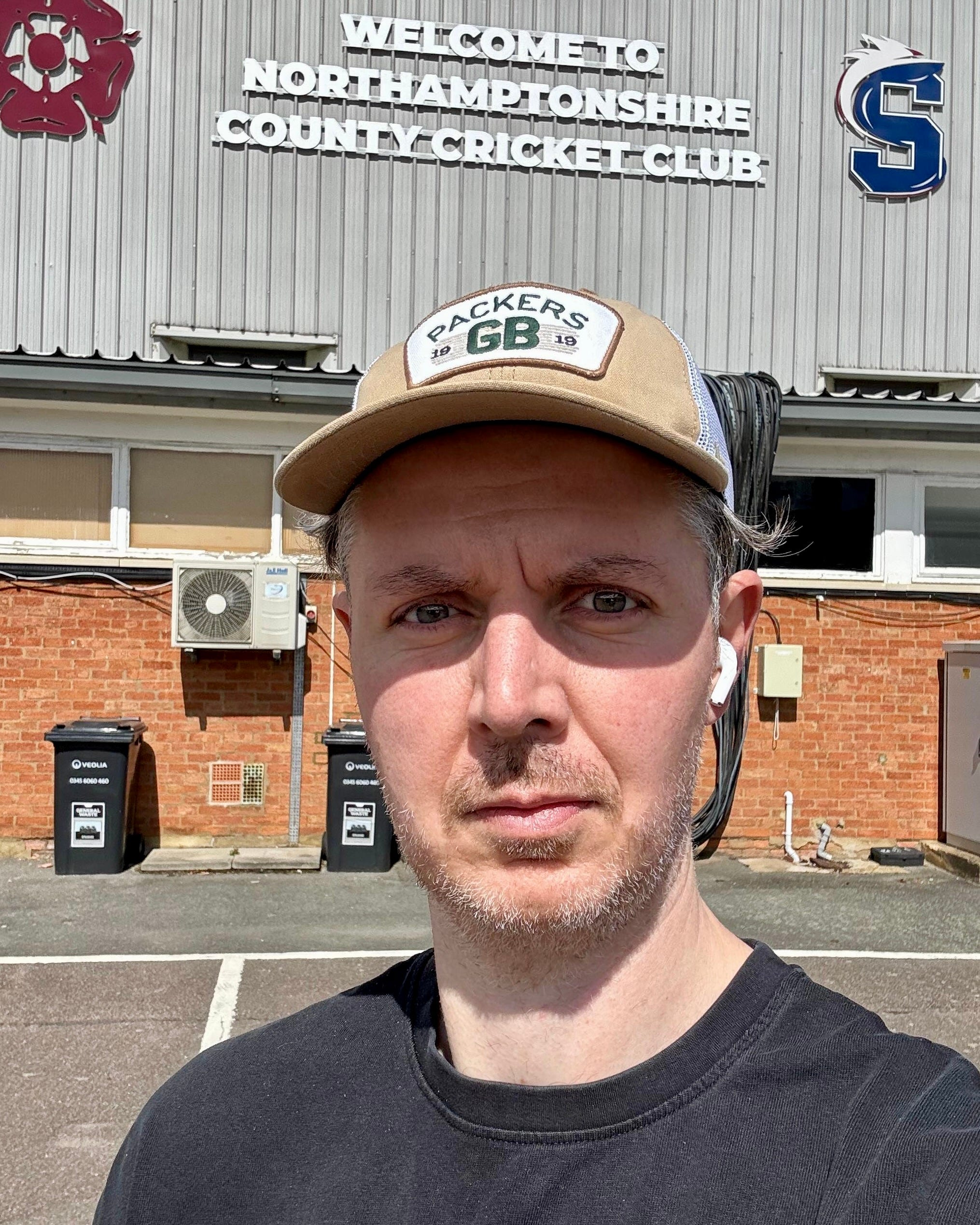
A double fracture at seven years old provided my first exposure to cricket.
Being consigned to a full-leg cast for several weeks meant I became very familiar with the daytime terrestrial television on offer in the spring/summer of 1993.
One day, I turned it on to find a man called Neil Fairbrother scoring ‘runs’ for a team called Lancashire.
Something clicked, despite my limited understanding of what was happening.
That same year, I became loosely aware of the Ashes - with a clear memory being listening to incredulous radio commentary in the car as Mark Lathwell was dismissed for a duck.
Momentum built as I watched more games, learnt how to bat and bowl, played the Brian Lara Cricket series, and read books about the sport - further drawn in early on by the brilliant “A Lot of Hard Yakka” by Simon Hughes, a serendipitous selection in the library one day.
That book sparked curiosity and interest in Middlesex CCC, while the amazingly cheap under-18 season membership prices made it accessible to watch regular matches at Lord’s with friends.
Three of us used those membership cards to get into the Oval pavilion and watch the opening night of T20 cricket in 2003, while that same competition gave me one of my most enjoyable days of fandom five years later when Middlesex lifted the trophy.
One of the key members of that victorious team in 2008 was Shaun Udal, someone I had scarcely thought about in the intervening 18 years until his name appeared in my Spotify feed last month.
Much like the list of publications I read on Substack, my podcast subscriptions skew quite cricket-y. But this one was different.
Shaun Udal: Playing With Warne, Marshall Brilliance & Parkinson’s Battle
(You can listen to the full episode above or watch it below.)
Thinking back, I had been loosely aware that he was struggling with an illness of some kind.
I had seen him being interviewed during the lunch break of televised cricket coverage, talking about his condition. However, the specifics had not sunk in.
He was an ill man, in clearly quite a bad way, talking about his difficulties and the support he was receiving from fellow ex-professionals.
Subsequent searching has led me to [Trigger warning: There are some dark themes in the following link] the feature in question, which I must have originally seen on Sky Sports’ coverage of Finals Day in 2023.
I glossed over it at the time and put it out of my head almost immediately. Little did I know then that less than 12 months later I would be receiving the same diagnosis.
Hearing Shaun talk about his condition on ‘Stick To Cricket’ (where he also discusses a lot more besides - I recommend this segment on Shane Warne) was difficult but relatable. Specifically, about the stage you go through before having any tests when parts of your body stop responding in the way that they used to, and you don’t know why.
I started to not feel [the ball] properly in my hand. I was starting to lose the feeling a bit in my fingers, and then I struggled to do buttons up, and my laces were getting a bit of a problem. I thought: ‘Something doesn’t feel right here.’
There is an initial shock and sadness upon receiving confirmation of the condition. That largely faded from me within a few weeks. You stop lying there at night, thoughts, uncertainties and insecurities racing, trying to process everything.
Those nightly crisis talks in your own mind are replaced by a low-level hum of ongoing frustration and irritation as the basics of daily life become more of a challenge.
You just get stuck on your own, and you feel lonely, and you ask: ‘Why has it happened to me? Why can’t I walk properly? Why am I shuffling? Why can’t I pick anything up?’
One line which really struck a chord was the mention of his family. Nobody would choose this affliction for themselves, but it magnifies when you consider the implications for your young children.
Thinking about some of the things you imagined you would do and experience together, now and in the future, which now have to be adapted or abandoned. The asks for them to help you at times when you should be helping them. The powerlessness you feel in making them grow up with a parent who is noticeably different, trying to understand why, while explaining the visible implications to other people seeing them for the first time.
It’s a pain, but it’s also the effect it’s had on my family. I’ve got a 21-year-old son who has grown up with his with his dad in problems. So he sees me upset and, yeah, it’s not nice.
I fell out of the habit of attending live cricket for a decade or so when adult life took over and found fresh ways to keep me busy.
But when I began to reassess how I spend my time a couple of years ago, it rose back up my priority list.
Yes, the big occasions, but also any occasion. It could be going to Finals Day at Edgbaston or stopping for 20 minutes to watch one of the three teams who play in the nature reserve at the end of my road.
I enjoy the sport, of course, but something about watching it has a meditative effect more than other hobbies or interests.
Maybe it’s the tranquillity of the setting, the fresh air, the ASMR of bat hitting ball, or the constant mental arithmetic required to contextualise game state and assess changes in strategy.
Whatever it is, it provides focus. Or it provides a distraction. Both can be equally useful.
I tried speaking to a therapist after being diagnosed, but didn’t feel I was getting a lot from it. It wasn’t nearly as helpful as an afternoon at Chelmsford or The Oval in providing mental clarity and respite.
It seems I’m not alone in this.
I’ll sit around the back of the ground, some far corner, just out of the way and watch the cricket. It also relaxes me with the other things that are going on in my life.
Sometimes I go by myself. I’ve got a business, and that can be quite stressful. So to get away from it I’ll just go and sit and watch the cricket for an hour. The problems are still there when you go back, but you can deal with them a bit better.
So, thanks, Shaun, for sharing your story on a prominent podcast and raising awareness of the realities of the condition.
And thanks again for the memories of that victorious day in 2008.
We were on the same side then, and I guess in a way we are now as well.
Go well. Keep digging in.
Shaun Udal is a fundraiser for the Cure Parkinson’s charity. Click here to learn more about their work.
Get in touch
If you'd like to discuss anything related to this newsletter or something I've written, you can email me, leave a comment below or reach me on a couple of different social media platforms.
One final thing…
A main reason for writing this newsletter at all is to find and connect with people in a similar position.
YOPD is a niche condition and potentially a lonely one for people without a physical or digital support network.
Please feel free to share this your networks to help it find someone who may benefit from being part of a relevant community.
Just caught up on a few of your posts after seeing this on LinkedIn, thanks for sharing some great writing. I found a place in north London near mine recently, Shepherd's Cot, which is home to three Cricket Clubs, two clubhouses and six pitches. It's become a really nice part of my weekend, sitting on the boundary rope with a beer watching some endearingly bad batting. There's no sport quite like it. Hope you're staying well – best wishes!
Can't believe your TV cheesehead appearance did notake the cut for this post.