

Thanks to the 112 of you who are subscribed to ‘Diary of a YOPD’ and the 243 people who have taken the time to read my last update.
Help this newsletter to reach more people by subscribing, sharing, and forwarding to others. If you have a Substack account, then likes, comments and restacks help too!
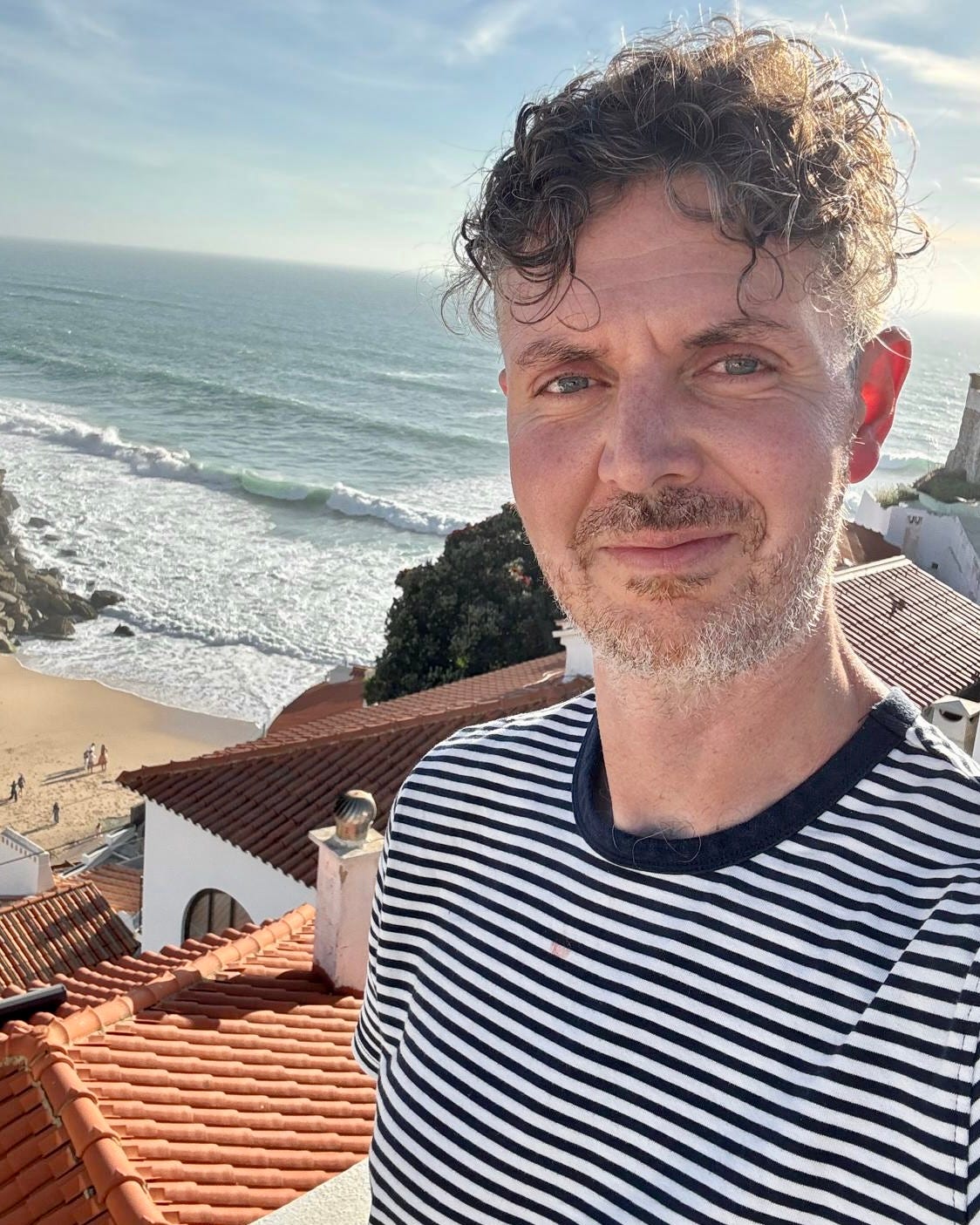
Today marks the two-year anniversary of receiving my Parkinson’s diagnosis.
(Or, as far as my two young children are aware, two years of my “sore shoulders”.)
Despite my getting slower, and everyday tasks taking ever longer, I would say those two years have gone fairly quickly.
The memory of walking out of that consultant’s office and back to Oxford Circus tube station is still vivid in my head.
As is the memory of a stranger on the tube that evening offering me a seat for no discernible reason, other than perhaps the karmic forces of the universe are offering me a helping hand in a time of need.
Other than the usual struggle of being a tall person on a cramped carriage, I wasn’t giving the impression of someone who needed help that day.
I suddenly had Parkinson’s, but I didn’t look like I had Parkinson’s.
This is an assumption I have been living under for the most part since then. An assumption I could get by and mask things well enough to fool those I didn’t spend lots of time around.
A recent encounter jolted me out of this assumption.
As I made small talk at the start of a chiropodist appointment, I mentioned that the last time I had visited was very close to when I had received some unwanted medical news.
“What news was that?” he said. “That you have Parkinson’s?
“Yes, it was actually. How did you know?”
“Oh, I could tell straight away. The way you walked in. The way you were taking your shoes off. Your face.”
Wait a second. My face?!
Admittedly, it was not necessarily full of expression, but in my head, it was proportionate to the excitement associated with an early-morning appointment with a foot quack.
“I didn’t realise it was that obvious, but maybe it is,” I said.
“Yes, I knew immediately,” he replied.
He later apologised for the rather too pleased-with-himself manner in which he had gone about making this observation, however, the broader point stayed with me.
When I think about the biggest changes over the past two years, this is probably number one.
People can now tell you have Parkinson’s, or, if they aren’t familiar with the condition itself, can tell that something isn’t right.
Two years ago, I felt I could cover up the most obvious signs. Now there are too many.
In a way, this is liberating. I declined that seat on the tube two years ago and often turn down other micro offers of support, which have increased in recent months.
The biggest change I see on the horizon over the next two years will be starting medication, which I will then take every day for the rest of my life. This is not a cure, but designed to ease the symptoms for hours at a time.
These wheels are already in motion, and this is another example of something I declined or put off longer than I should have, out of a self-sabotaging sense of stoicism.
If you are not taking medication, you are fine, right?
If you are declining offers of help, then you are fine, right?
If you keep trying to carry on as you once were capable of, then you’re fine, right?
Unfortunately, not. This condition resets the baseline of what fine looks like.
I’ve said a few times in previous editions of this blog how I feel most in control of this condition when I actively engage with it and the surrounding community.
In reality, I have wasted too much energy fighting it and pretending to myself that I am in control of the effects it has on me and how I present myself to others.
This is clearly not the case, but giving in to this fact does not mean giving up on things entirely.
‘Fine’ is relative. For anyone, life is about being as fine as you can be for as much of the time as possible.
Some advice I’d give to anyone starting out on this journey is: don’t be a victim, but don’t be a martyr either.
I will try to act upon that advice myself more over the next two years.
Although, I maintain that my face is no more unusual than it ever has been…
What does Parkinson’s look and feel like?
Below are two recent posts I’ve seen from fellow Parkies describing some aspects of life which are relatable to my experience of the condition.
The fatigue, which strikes unpredictably and without relation to how well rested or hydrated you are.
Secondly, something I’d noticed, but never thought about until seeing it described in this video. You notice symptoms of stress physically before you are consciously aware of the feeling.
Get in touch
If you'd like to discuss anything related to this newsletter or something I've written, you can email me, leave a comment below or reach me on a couple of different social media platforms.
One final thing…
A main reason for writing this newsletter at all is to find and connect with people in a similar position.
YOPD is a niche condition and potentially a lonely one for people without a physical or digital support network.
Please feel free to share this your networks to help it find someone who may benefit from being part of a relevant community.
Acceptance is a crucial pivotal point of learning to evolve with parkinson’s (lowercase p). You got this!
I was diagnosed three years ago at 60, so not YOPD, but we still share the same affliction, and I went through the same shock and subsequent discovery that you describe. I appreciate your thought that we should not be victims nor martyrs. There is no battle to win or lose. What we have is a search for new ways to live.